Have you ever stuck a batch of cookies in the oven with high hopes that you've *finally* found the perfect recipe, only for them to emerge being far from what you imagined? According to cookie science, there are a variety of factors that will affect the taste & texture of the final product, from the type of ingredients to the temperature of your oven. Keep reading below for ourcookie baking tips, so you can finally bake the cookies of your dreams!
Baking requires a great level of precision when measuring out the ingredients. A little more or a little less of an ingredient might change your cookies quite drastically. We recommend using a kitchen scale to help with the precision & accuracy of your measurements, but it will also help to have a deeper understanding behind the impact each ingredient has on the outcome of your cookies.

Flour is one of those ingredients wherea kitchen scale comes in handy, as it's especially difficult to measure in cups. In fact, scooping the measuring cup into a bag of flour can add up to 30 percent more flour than the recipe calls for! If you don't have a kitchen scale, make sure to stir up the flour before measuring, and rather than heaping or packing the flour, spoon it into the measuring cup.
Original NestlÉ® Toll House® Chocolate Chip Cookie Recipe
As for the type of flour you should use, all-purpose flour will give you the classic cookie texture. Substituting a little bread flour will make your cookies more chewy, and using cake flour will make your cookies softer.
Butter is a critical cookie ingredient as it alters both the flavor and texture of your cookie. Butter is an emulsion, meaning it's comprised of two things that do not want to stay together. When butter is heated and begins to melt, this emulsion breaks as the fat naturally separates from the milk solids and water. Using room temperature butter can produce a more cakey, airy cookie because the butter melts in the oven, which creates air pockets in the cookie. Melting the butter beforehand will give you more dense, chewy cookies.
The ratio of brown sugar to white sugar determines the softness of your cookies. Using more white sugar makes your cookies thin, crisp, and more delicate. More brown sugar makes a softer, chewier cookie because it melts and caramelizes at a faster rate. You can experiment with a combination of the two to achieve a cookie somewhere in between.
Burnt Miso (brown Butter) Dark Chocolate Chip Cookies
Eggs are a major source of moisture in your cookie dough. Using egg whites will give you a taller, drier cookie. More egg yolks will give you fudgy, dense cookies. Bringing eggs to room temperature beforehand will add more volume to the dough.
Baking soda and baking powder are leavening agents that react with different ingredients in the dough-making and baking process. Baking powder generally produces more higher rising, cakey cookies with smooth tops. Baking soda tends to produce craggy, dense cookies. For the best of both worlds (crispy outside, soft center), use a bit of each.
Unless you bake frequently and regularly calibrate your oven, your oven's temperature could be inaccurate. So, even if you set your oven to 350°F, it might be closer to 325°F or 375°F. While this might not seem like a big deal, using the incorrect temperature can cause issues like over-browning, excess spread, under-baking in the centers, or uneven baking. Luckily, oven thermometers are inexpensive and can be an incredibly helpful addition to a baker's kitchen. Place it in the center of your oven so you always know the true temperature.
Drop Cookies: Beyond The Fork
Keep in mind, the cookie dough will spread out a bit while baking. Greasing the pan will further contribute to cookie-spreading. Of course, we want our cookies to spread a little, but we don't want our cookies to merge into one big mega cookie (even though a mega cookie does sound pretty cool...). So, give your cookies a little room to breathe.
If you don't have the time or wherewithal to scratch bake (and honestly who does?!) our Take and Bake Cookies are a great option for at home, fresh cookies! Here are our tips for baking them perfectly:
This tip is mainly for aesthetic reasons, but can have an effect on texture and flavor, too! Topping each cookie dough ball with more chips, nuts, cinnamon, or whatever your heart desires, will help make them picture perfect and give them extra flavor and texture. When doing this with chips or nuts, press them into the top of the ball of dough close together, and they'll spread apart as the cookie bakes. Our personal favorite way to top our Take and Bake chocolate chip cookies is with sea salt flakes, to give them a little extra pizzazz.
How To Keep Cookies Fresh: 10 Steps (with Pictures)
What’s even better than a garnish? Why an ice cream cookie sandwich of course! Grab your favorite local ice cream, sandwich it between two fresh baked Quebrada Take and Bake cookies and there you have it--a heavenly summer treat.
When putting the sheet pan in the oven, make sure to push it in past the edge of the rack. You want to leave room for the air to circulate in the oven. In case your oven has hotspots, turn the tray halfway through cooking to get each cookie evenly baked. Make sure you can do this safely and quickly so you don't lose too much heat from the open oven door.

Using a kitchen timer will give you a ballpark amount of time for the cookies to be in the oven, but visual cues and an oven thermometerare the real MVPs. Our Take and Bake cookies should be cooked at 300 degrees for about 16 min, with a few extra minutes added if you're baking the cookies from a frozen state. When your cookies start to puff and the edges turn a golden brown color, these are good signs that they are close to being done. For cookies on the softer side, the top centers can look slightly under-baked.
Easy To Make Oreo Cheesecake Cookies Recipe
Letting your cookies cool directly on the pan will continue to cook them, which can potentially lead to overdone bottoms. Additionally, the steam can't escape as well when the cookies are sitting on the pan, which may cause them to get a bit soggy. Allow the cookies to cool on the tray for just a few minutes so the dough can settle (this keeps the cookie from falling apart or adjusting shape). Then, transfer them with a spatula to a cooling rack with some clearance underneath to ensure proper airflow. The best racks for cookies are formed from a tight wire grid, rather than the wide bars.
We hope these tips help you on your journey to baking your own definition of the “perfect” cookie. Ultimately, there’s no wrong way to bake a cookie, and there’s especially no wrong way to eat one! Make sure to tag us on social media with your Take and Bake creations.
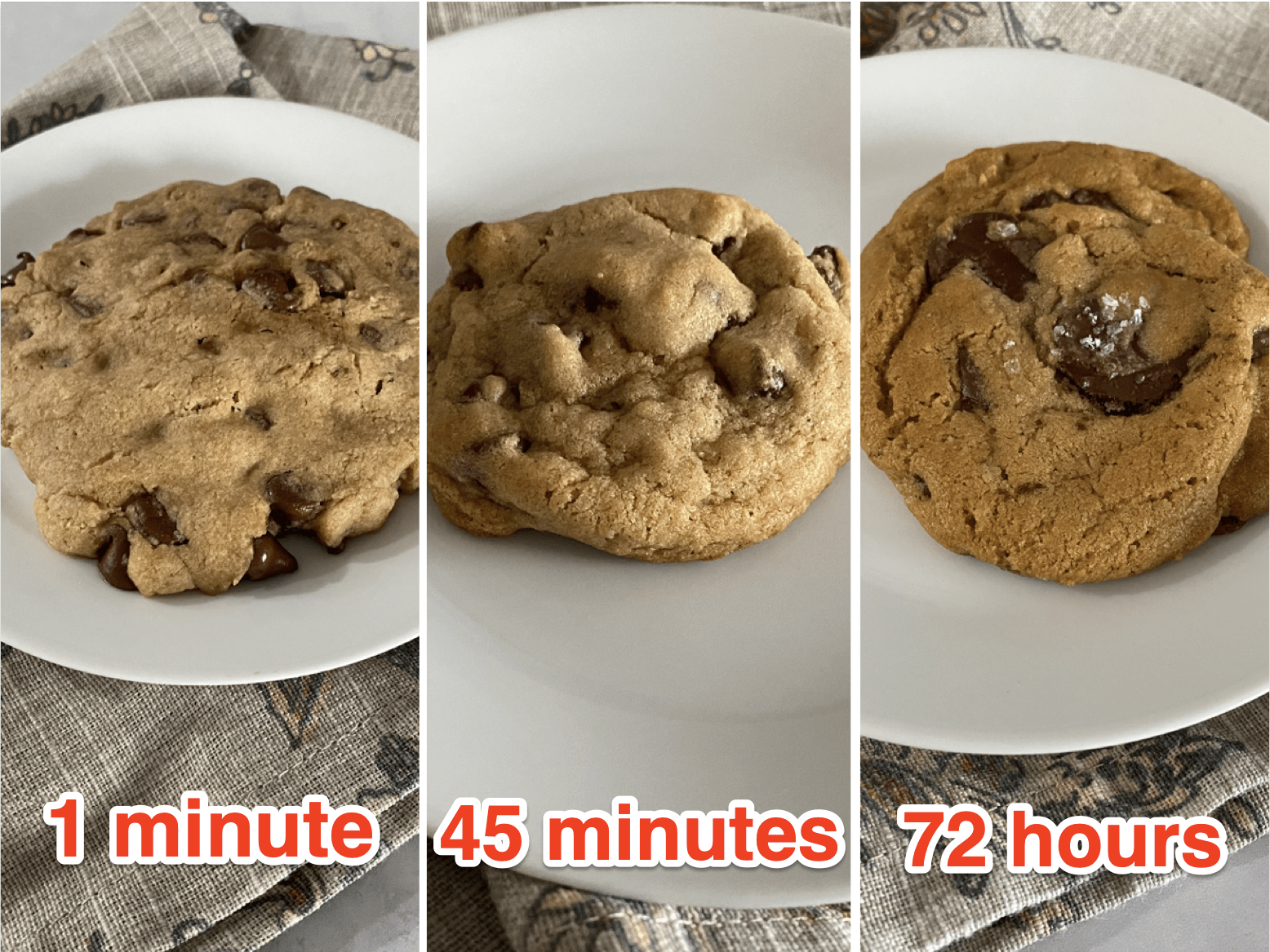
Speaking of our Quebrada Take and Bake cookies: each batch comes with 12 cookie balls ready to bake, with a choice of chocolate chip, snickerdoodle, double ginger, oatmeal, or an assortment of everything! You can stock up on Take and Bake cookies at any Quebrada location (Arlington, Wellesley or Belmont) or order online.Baking is a science, and it was never more obvious to us than when we developed our recipe for small batch chocolate chip cookies. Test after test, we would make slight adjustments to the quantity of butter, sugar, flour and eggs, giving us cookies that ranged from crispy and firm to soft and chewy. Ultimately we landed on what we all agreed to be our best-ever version: crisp around the edges, with a perfectly chewy centre. With that in mind, we took it one step further: testing to the differences to target common mistakes made when baking this iconic cookie. Here’s what we discovered:

How To Bake The Perfect Chocolate Chip Cookie
The longer you bake a cookie, the dryer it’s going to get. So if you’re into a super crispy and crunchy cookie, leaving them in the oven for an extra couple of minutes is a totally okay move. Just be careful not to burn the bottoms!
Flour is what holds the structure of a cookie together; when there’s not enough flour in your cookie dough, they will spread excessively and never cook through. The look of a dough can be deceiving, as sugar has the ability to absorb a lot of liquid, so never eyeball it and always follow the recipe to make sure you’re adding the right amount of flour to every batch.
Since brown sugar is made of a combination of both granulated sugar and molasses, it has a higher water content, which keeps the texture of the cookie moist. Making the switch to all white sugar gives you a crispier cookie, but lacks that rich flavour that comes with using brown sugar.
Why Chill Cookie Dough And Other Techniques To Stop Cookies From Spreading
We’ve found that the optimal temperature for cookie baking is 350F. It gives the butter in the dough time to melt and lightly spread before the remaining ingredients cook through. When your oven is too hot, it rushes this process, resulting in a puffy, dry


Posting Komentar untuk "How Long Does It Take To Make Cookies At Mcdonald'S"